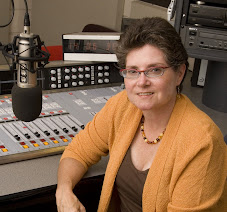
Alexandra Zapruder has provided an important resource for understanding the Holocaust in her book, Salvaged Pages. By collecting the diaries of children and teenagers, she gives us the tools to learn not only about what that period was like for young people but also to get a sense of how the constrictions, deprivations, and struggle for survival felt in different places. As she notes in our interview, Anne Frank's story tells just one version, and for many people, that together, perhaps, with some film images of life in labor and death camps, has become the story. But that challenge of the Holocaust is not just its scale or even its horror but the difficulty of keeping this iconic historical event meaningful. Almost 70 years after World War II ended, we have gotten into the habit of talking about how terrible the Holocaust was and reciting the mantra about not forgetting and never again (though,of course, sadly, genocide keeps on happening). But it seems to me that we need fresh perspectives in order to keep learning and stay interested. Otherwise, remembering becomes rote, and that makes it meaningless.
My interview with Zapruder is my last for Lincoln Avenue, at least for now. Thanks for listening for the past few years. And a special thanks to all those who have commented on the show and the blog. Doing this program has been a real treat for me; discovering that people are actually listening makes it even better.
Thursday, April 26, 2012


Friday, April 20, 2012
The Writer at Work
Preparing to interview George Packer requires tough choices. Do we talk about Iraq or about American liberalism? About journalism or fiction? About the past or about the future? Packer has written two novels, a play, a couple of book-length non-fiction works, and a whole lot of articles for a variety of magazines. His main gig these days is as a staff writer for The New Yorker, a job that he says allows him the luxury of working on a story for several months at a time -- something that's unusual for journalists today.
One of the qualities of the best writers I know is curiosity, something Packer displays in his habit of deflecting questions about himself and asking lots of questions of the people around him. After our interview, he sat down with a dozen or so YSU journalism students, and after talking a little about his own work, he started asking them questions. He did the same thing over dinner later, asking those around the table about our work. Some of that is professional necessity. He is, after all, doing a bit of writing about Youngstown. But some of it, I think, is a habit of mind. And that's at least half of what makes a good writer.
One of the qualities of the best writers I know is curiosity, something Packer displays in his habit of deflecting questions about himself and asking lots of questions of the people around him. After our interview, he sat down with a dozen or so YSU journalism students, and after talking a little about his own work, he started asking them questions. He did the same thing over dinner later, asking those around the table about our work. Some of that is professional necessity. He is, after all, doing a bit of writing about Youngstown. But some of it, I think, is a habit of mind. And that's at least half of what makes a good writer.
Sunday, April 15, 2012
YSU's Union History
As a YSU faculty member and YSU-OEA officer, I am, of course, not an objective bystander when it comes to the union. But my interest in its history is not just about my investment in its work. When John Russo and I wrote Steeltown USA: Work and Memory in Youngstown, we included the story of the founding of the faculty union, because it reflected the strong connection many people in this community made between work and unions. We believed that it wasn't at all accidental that Tom Shipka, the son of local labor leader Al Shipka, was the lead organizer of the faculty union. As Tom explains in our interview, his father didn't push him to become a labor organizer. He didn't need to. Tom understood not only how a union could benefit workers -- even professors -- but also how to organize. He knew that organizing is about conversations with people about their experiences and concerns. And he knew that in order to succeed, a faculty union would need community support. The leaders of the YSU-OEA today know that we have to keep doing both kinds of work: talking with members and working with the community.
What I appreciate most about Tom's work, and about his perspective on the union, is his explanation of how the faculty union helped make YSU a better university. Improving the quality of the faculty, providing support to allow the faculty to conduct the research that keeps them engaged with their fields and able to bring the latest ideas into the classroom, practices like teaching evaluations and well-defined processes for evaluation by department chairs -- all of these are elements of the union contract that help YSU maintain a high-quality, highly-productive faculty. If you read the local paper, all you hear about is what faculty get paid, but the union is about so much more.
Talking with Tom also reminded me of how important administrative support is. Tom built an incredibly productive department -- not just in terms of scholarship but also in terms of great teaching and significant contributions to the university and local community. He understood that the most important thing an academic administrator can do is try to create conditions that encourage faculty to do their best work.
What I appreciate most about Tom's work, and about his perspective on the union, is his explanation of how the faculty union helped make YSU a better university. Improving the quality of the faculty, providing support to allow the faculty to conduct the research that keeps them engaged with their fields and able to bring the latest ideas into the classroom, practices like teaching evaluations and well-defined processes for evaluation by department chairs -- all of these are elements of the union contract that help YSU maintain a high-quality, highly-productive faculty. If you read the local paper, all you hear about is what faculty get paid, but the union is about so much more.
Talking with Tom also reminded me of how important administrative support is. Tom built an incredibly productive department -- not just in terms of scholarship but also in terms of great teaching and significant contributions to the university and local community. He understood that the most important thing an academic administrator can do is try to create conditions that encourage faculty to do their best work.
Friday, April 6, 2012
Talking with the Goddess of Young Adult Literature
It's clear that Teri Lesense is passionate about young adult literature -- and about young adults. You can hear her excitement and commitment in her voice. You can also see it in the way she writes about books for younger readers. Her blog is full of information about new books, about ways of engaging adolescent readers, and last week, about her experiences as a guest speaker at this year's YSU English Festival. So rather than offering my own comments, I think you should go visit Teri's blog, and see what she has to say for yourself.
Ok, I'll add just one thing: my favorite idea from Teri is the reading ladder. I've been frustrated to hear so many of my English Ed students arguing that we shouldn't ever ask high school students to read anything in which they don't have an intrinsic interest. They insist that young adult lit is all kids need, telling me that "classic novels have nothing to offer." It bothers me that future English teachers believe that literature is largely worthless, or that it's only valuable if readers identify with the characters. Yes, I want to engage young adults in reading, and I see the value of YA lit for accomplishing that. But I'm troubled by the notion that no one should ever be pushed to read something that isn't about someone just like them. And isn't education about getting us to expand our perspectives, to understand the world far beyond ourselves? And what about developing stronger reading skills, not just a love for reading? Lesense's model of the reading ladder offers a smart way of addressing that gap.
Ok, I'll add just one thing: my favorite idea from Teri is the reading ladder. I've been frustrated to hear so many of my English Ed students arguing that we shouldn't ever ask high school students to read anything in which they don't have an intrinsic interest. They insist that young adult lit is all kids need, telling me that "classic novels have nothing to offer." It bothers me that future English teachers believe that literature is largely worthless, or that it's only valuable if readers identify with the characters. Yes, I want to engage young adults in reading, and I see the value of YA lit for accomplishing that. But I'm troubled by the notion that no one should ever be pushed to read something that isn't about someone just like them. And isn't education about getting us to expand our perspectives, to understand the world far beyond ourselves? And what about developing stronger reading skills, not just a love for reading? Lesense's model of the reading ladder offers a smart way of addressing that gap.
Wednesday, March 28, 2012
Why Teach Kids About Sex?
I'm not sure why I always assumed that sex education was about the basics of conception and how to avoid it, but talking with Alexandra Lord made clear how wrong I was. Nor is sex ed only about preventing venereal diseases, though that has mattered more than I'd recognized. At heart, whether, what, and how we teach young people about sex is really all about how we think about society and each other. Do we think that sexuality is ok for some people but not for others? Do we see sex as a source of disease and problems, or as a source of pleasure? Embedded in these overtly sexual questions are ideas about how we think about each other's intelligence, morality, opportunities, and interactions. We have tried to control or limit the sexual activity -- or at least the procreation -- of people we think are intellectually inferior. We have ignored the educational needs of those we deem too "naturally" immoral to be trusted to have their sexual desires controlled at all, or we have focused only on educating them, assuming that "people like us" will behave "well" with no guidance at all. We base our ideas about about what to teach on how functional we think other people's families are. And we educate people to avoid catching disease because we're afraid they might infect us. We simply can't separate out sex ed from social power, human relations, and culture.
Of course, we've been seeing a lot of evidence of that lately, with public debates about insurance coverage for contraception and requiring invasive procedures that mimic rape before a woman can have an abortion. Those debates reflect different perspectives not just on sex, and not just on morality, but on larger questions of who will have the power to control other people's bodies and choices.
Of course, we've been seeing a lot of evidence of that lately, with public debates about insurance coverage for contraception and requiring invasive procedures that mimic rape before a woman can have an abortion. Those debates reflect different perspectives not just on sex, and not just on morality, but on larger questions of who will have the power to control other people's bodies and choices.
Thursday, March 22, 2012
The Chief Organizer at Work
Wade Rathke is pretty darned inspiring. He started one of the most successful organizing groups in U.S. history, ACORN (Association of Community Organizations for Reform Now), when he was just out of college, and over its 40-year history, the organization led drives for fair housing, fair wages, voter registration, and more. And despite having to shut ACORN down under political and financial pressure (in part because of defunding by the government) in 2010, Rathke still believes in the power of organizing and continues his work, much of it now international.
He's also still involved with social issues in the U.S., and his book Citizen Wealth lays out a clear analysis of what people need to achieve income stability, the obstacles they face, and strategies for addressing those challenges. Along with the ideas, what comes through in the book is Wade's ongoing belief that people working together can make a difference. In the face of decades of being involved in the ups and downs of public and business policies that seem to be incredibly able to perpetuate and expand inequality, he writes forcefully and optimistically about the possibility of social, economic, and political change.
Wade spoke as part of YSU's Center for Working-Class Studies lecture series. I had to break the talk into several sections, but here are links:
Part1
Part 2
Part 3
Part 4
Part 5
Audience Questions
He's also still involved with social issues in the U.S., and his book Citizen Wealth lays out a clear analysis of what people need to achieve income stability, the obstacles they face, and strategies for addressing those challenges. Along with the ideas, what comes through in the book is Wade's ongoing belief that people working together can make a difference. In the face of decades of being involved in the ups and downs of public and business policies that seem to be incredibly able to perpetuate and expand inequality, he writes forcefully and optimistically about the possibility of social, economic, and political change.
Wade spoke as part of YSU's Center for Working-Class Studies lecture series. I had to break the talk into several sections, but here are links:
Part1
Part 2
Part 3
Part 4
Part 5
Audience Questions
Thursday, March 8, 2012
Dying with Dignity
As Carole Ann Drick explains in our interview, the way we die has changed over time, from the fairly quick at-home death from critical disease to the extended, often very slow process of dying in a hospital or nursing home. All those machines and that long, drawn-out decline takes away our dignity. She advocates more use of hospice and other approaches to allow us to die more calmly, surrounded by friends and family or, at least, by caring and appropriately-trained nurses.
Her vision seems like an attractive alternative, something that should be common sense. It sometimes seems that we want to extend each person's life as long as possible, regardless of its quality. While Drick isn't arguing for euthanasia, her approach does suggest that we might die more comfortably, in both spiritual and physical sense, if we were able to accept rather that fight death.
Her vision seems like an attractive alternative, something that should be common sense. It sometimes seems that we want to extend each person's life as long as possible, regardless of its quality. While Drick isn't arguing for euthanasia, her approach does suggest that we might die more comfortably, in both spiritual and physical sense, if we were able to accept rather that fight death.
Subscribe to:
Posts (Atom)